
The Superblock Model: From Barcelona's Experiment to a Replicable Urban Strategy?
Published February 15, 2026
By reconfiguring traffic flow to prioritize pedestrian and green spaces, the superblock concept is gaining traction as a tool for urban health and sustainability. But is the model truly transferable beyond its initial testbeds?
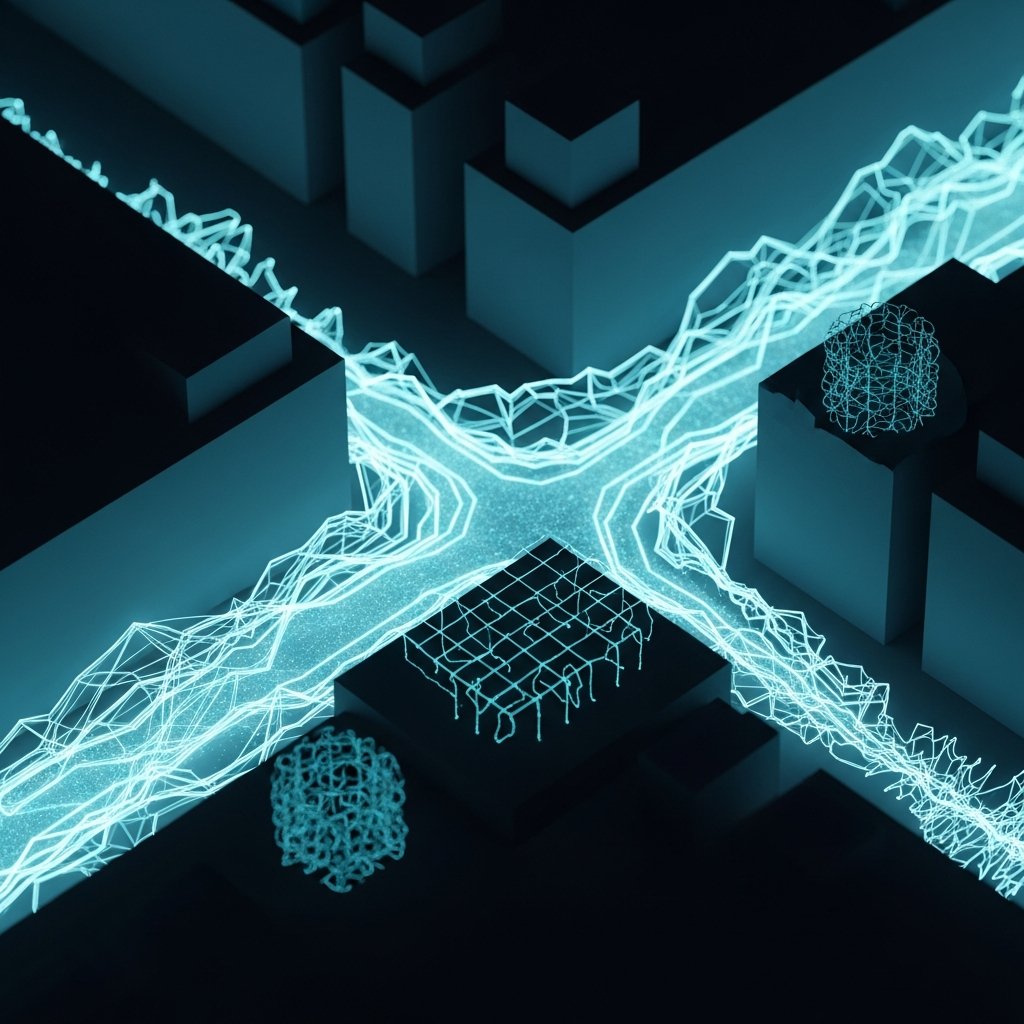
The superblock, or 'superilla' in Catalan, is an urban planning strategy that groups several city blocks and diverts through-traffic to the perimeter. This creates a low-speed, pedestrian-prioritized interior, transforming former roadways into public spaces for recreation and community gathering. Initially implemented and expanded in Barcelona, the model aims to reduce the dominance of automobiles in dense urban environments, with documented reductions in noise and air pollution and increases in green space and resident well-being.
While the superblock concept has demonstrated measurable local benefits in Barcelona by reducing pollution and noise while increasing public space, its broader adoption hinges on navigating complex political, social, and logistical challenges. The key question is whether this model represents a scalable template for post-automotive urban design or a bespoke solution tied to specific urban forms. Monitoring the replication and adaptation of this model in other cities provides a key signal for a systemic shift in urban mobility and land use.
The Barcelona Blueprint: A Model for Reclaiming Urban Space
The core mechanism of the superblock involves a grid of city blocks, typically 3x3, where through-traffic is redirected to the exterior roads. The internal streets are converted into shared-space zones with speed limits drastically reduced to around 10 km/h, prioritizing pedestrians and cyclists. This frees up significant asphalted area—in Barcelona's case, up to 70% of street space—for conversion into parks, plazas, and playgrounds. Studies of implemented superblocks have reported tangible benefits, including reductions in NO2 levels, decreased noise pollution, and an increase in commercial activity on the reclaimed streets.[1][2]
Transfer Pathway: From Tactical to Systemic
The transfer of the superblock model to other cities often begins with 'tactical urbanism'—low-cost, temporary interventions that allow residents and planners to experience the changes before committing to expensive, permanent construction. This approach helps build community support and allows for design adjustments. For broader adoption, the superblock concept is often linked to the '15-minute city' framework, which provides a compelling political and social narrative for creating more livable, self-sufficient neighborhoods. A successful transfer pathway sees the model evolve from a tactical experiment to a fully funded and legally codified element of a city's official urban plan.[3][4]
Operational Constraints and False Positives
A key challenge in assessing the spread of superblocks is distinguishing genuine implementations from superficial ones. A 'false positive' might involve a city rebranding a simple traffic-calming project or pedestrianized street as a 'superblock' without implementing the crucial network-level traffic diversion that defines the model. True implementation requires a systemic change to the traffic hierarchy across a multi-block area. Furthermore, the model's effectiveness is constrained by the existing urban fabric; cities without a consistent grid pattern may find it difficult to apply the model without significant modification. Successful deployment is therefore less about copying Barcelona's exact design and more about adapting the core principles to local conditions.[5]
Skeptical lens / counterpoint
The implementation of superblocks is not without friction. Initial rollouts have faced resistance from some local businesses concerned about reduced vehicle access and from residents accustomed to previous traffic patterns. Critics argue that the model can be disruptive, requires significant political will to overcome inertia, and may not be easily adaptable to cities with different grid structures or cultural norms around transportation. Success depends heavily on robust community engagement and iterative adaptation, rather than a rigid, top-down application.[7]
What changed recently
Interest in urban redesign concepts like superblocks has intensified in the post-COVID-19 era, as cities re-evaluate the allocation of public space and the importance of local amenities. Academic reviews published in 2023 and 2024 continue to analyze the model's impacts on sustainability, health, and well-being, providing a growing body of evidence for other municipalities considering similar interventions. This recent analysis moves the discussion from a single, localized case study toward a more generalized urban strategy, with frameworks for assessing its potential in varied urban contexts.
What to watch next
- Track pilot projects in cities outside of Spain, particularly in North America and Asia, to assess the model's adaptability to different grid layouts and car-centric cultures.
- Monitor economic impact studies on local businesses within established superblocks to verify long-term effects on commerce.
- Look for the integration of superblock principles into official transportation and land-use master plans as a leading indicator of policy entrenchment.
Sources
- https://www.c40.org/case-studies/barcelona-superblocks/
- https://www.academia.edu/68229131/Changing_the_urban_design_of_cities_for_health_The_superblock_model
- https://www.researchgate.net/publication/372452484_How_15-min_City_Tactical_Urbanism_and_Superblock_Concepts_Are_Affecting_Major_Cities_in_the_Post-Covid-19_Era
- https://www.intertraffic.com/news/15-minute-city-urban-mobility-solution-to-environment
- https://tugraz.elsevierpure.com/en/publications/the-superblock-model-a-review-of-an-innovative-urban-model-for-su/
- https://www.researchgate.net/publication/378667379_The_superblock_model_A_review_of_an_innovative_URBAN_model_for_sustainability_liveability_health_and_well-being
- https://reasonstobecheerful.world/superblocks-are-for-people/
- https://www.linkedin.com/posts/itssambentley_did-you-know-about-this-hidden-design-in-activity-7420389854905139200-m3Vt
- https://www.facebook.com/SamBentley/videos/theres-a-hidden-design-in-barcelona/2074518679998656/